UK businesses can’t afford to ignore recent fire safety law changes. The Fire Safety (England) Regulations 2022 bring tough new rules, especially for those managing flats and high-rises. Getting to grips with these updates matters for both legal compliance and keeping people safe.
This guide breaks down what’s changed, who it affects, and how to stay on the right side of the law. It’s not just about avoiding fines – proper fire safety protects lives and reputations.
The Evolving Landscape of UK Fire Safety Legislation
Fire safety laws have transformed since the Grenfell tragedy. The Fire Safety Act 2021 tweaked the Regulatory Reform (Fire Safety) Order 2005, but the 2022 regulations went further. They target multi-occupancy buildings, particularly tall residential blocks.
More changes are coming. By 2026, we’ll see mandatory sprinklers in new care homes and Personal Emergency Evacuation Plans for vulnerable residents in high-rises. Property managers and construction firms need to stay alert – the goalposts keep moving.
Key Provisions of the Fire Safety (England) Regulations 2022
Since January 2023, these rules have applied to all residential buildings with multiple households. The toughest requirements hit high-rises over 18 metres or seven storeys tall.
For tall buildings, responsible persons must now:
- Give residents clear fire safety advice
- Share building plans and wall details with fire crews
- Check fire lifts monthly
- Install new signage to help firefighters navigate
Even smaller blocks have new duties. Tenants must receive information about fire doors and evacuation procedures. It’s no longer enough to just have a fire risk assessment – communication matters too.
Understanding the ‘Responsible Person’ and Their Duties
The Regulatory Reform (Fire Safety) Order 2005 (FSO) defines who’s accountable. Usually it’s the building owner or managing agent. Their responsibilities just got bigger.
Key duties now include:
- Keeping fire services updated about building risks
- Monthly equipment checks with prompt repairs
- Clear floor numbering for emergency crews
- Regular, thorough fire risk assessments
The Health and Safety Executive (HSE) doesn’t take breaches lightly. Fines and even jail time await those who cut corners.
Future Changes: 2025 and 2026 Regulations
More reforms are coming down the track. Smart businesses are preparing now.
Mandatory Sprinklers in New-Build Care Homes (2025)
From March 2025, sprinklers become compulsory in new care homes. It’s a sensible move – elderly residents often need extra protection. Developers should factor this into current projects.
Personal Emergency Evacuation Plans (PEEPs) (2026)
By 2026, high-rises must have tailored escape plans for disabled residents. This means identifying who needs help and working out how to get them out safely. It’s not just about lifts – some may need evacuation chairs or specialist assistance.
Other Anticipated Changes
Second staircases in new tall buildings look likely. The construction industry should watch this space – designs may need rethinking.
Compliance Steps for Businesses and Responsible Persons
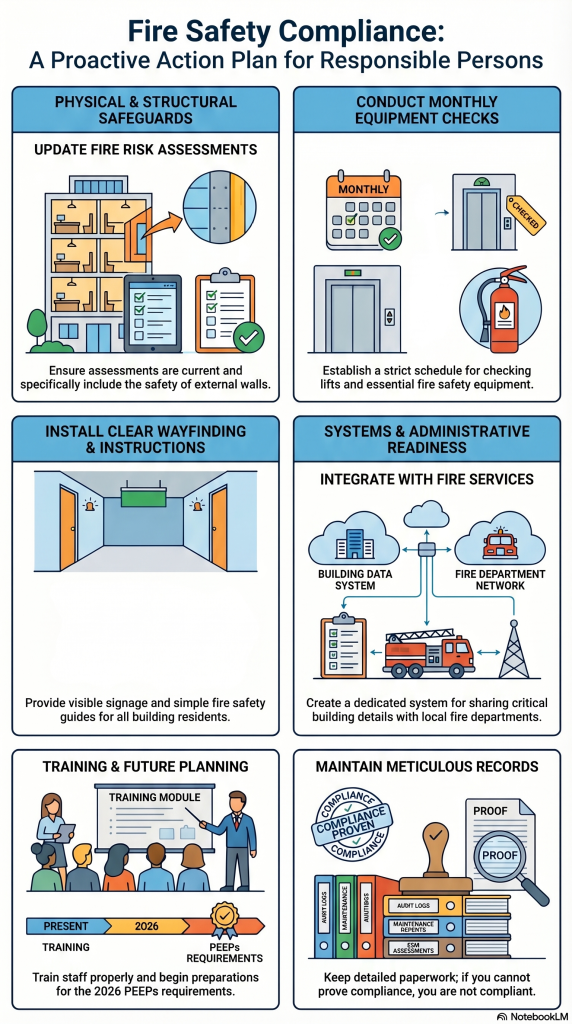
Don’t wait for inspectors to knock. Follow this action plan:
- Update fire risk assessments – include external walls
- Create a system for sharing building details with fire services
- Set up monthly lift and equipment checks
- Install clear wayfinding signs
- Give residents simple fire safety instructions
- Start planning for 2026’s PEEPs requirements
- Train staff properly
- Keep meticulous records
Paperwork matters as much as physical precautions. If you can’t prove compliance, you’re not compliant.
Conclusion
The 2022 regulations and coming changes raise the bar for fire safety. For building owners and managers, compliance isn’t optional. Those who act now will avoid last-minute scrambles when new rules take effect. More importantly, they’ll keep residents safer when it matters most.
Frequently Asked Questions

Who qualifies as the 'responsible person' under UK fire safety regulations?
The Regulatory Reform (Fire Safety) Order 2005 defines the responsible person as typically being the building owner or managing agent. Their duties have expanded under the 2022 regulations, particularly for residential buildings with multiple households.
What new requirements apply to high-rise buildings over 18 metres?
Responsible persons must now provide residents with clear fire safety advice, share building plans with fire crews, conduct monthly fire lift checks, and install new navigational signage for firefighters. These requirements came into force in January 2023 under the Fire Safety (England) Regulations 2022.
Do smaller residential blocks have any new fire safety obligations?
Yes, even smaller multi-occupancy buildings must now provide tenants with information about fire doors and evacuation procedures. The regulations emphasise improved communication alongside existing fire risk assessment requirements.
When will mandatory sprinklers be required in new care homes?
The article states that mandatory sprinklers in new care homes will be introduced by 2026, as part of ongoing updates to UK fire safety legislation following the Grenfell tragedy.
Are there upcoming changes regarding evacuation plans for vulnerable residents?
By 2026, Personal Emergency Evacuation Plans will become mandatory for vulnerable residents in high-rise buildings, representing another significant change in fire safety requirements.
What's the legal basis for these new fire safety regulations?
The changes stem from the Fire Safety (England) Regulations 2022, which amended the Regulatory Reform (Fire Safety) Order 2005. These updates were influenced by the Fire Safety Act 2021 and responses to the Grenfell Tower fire.