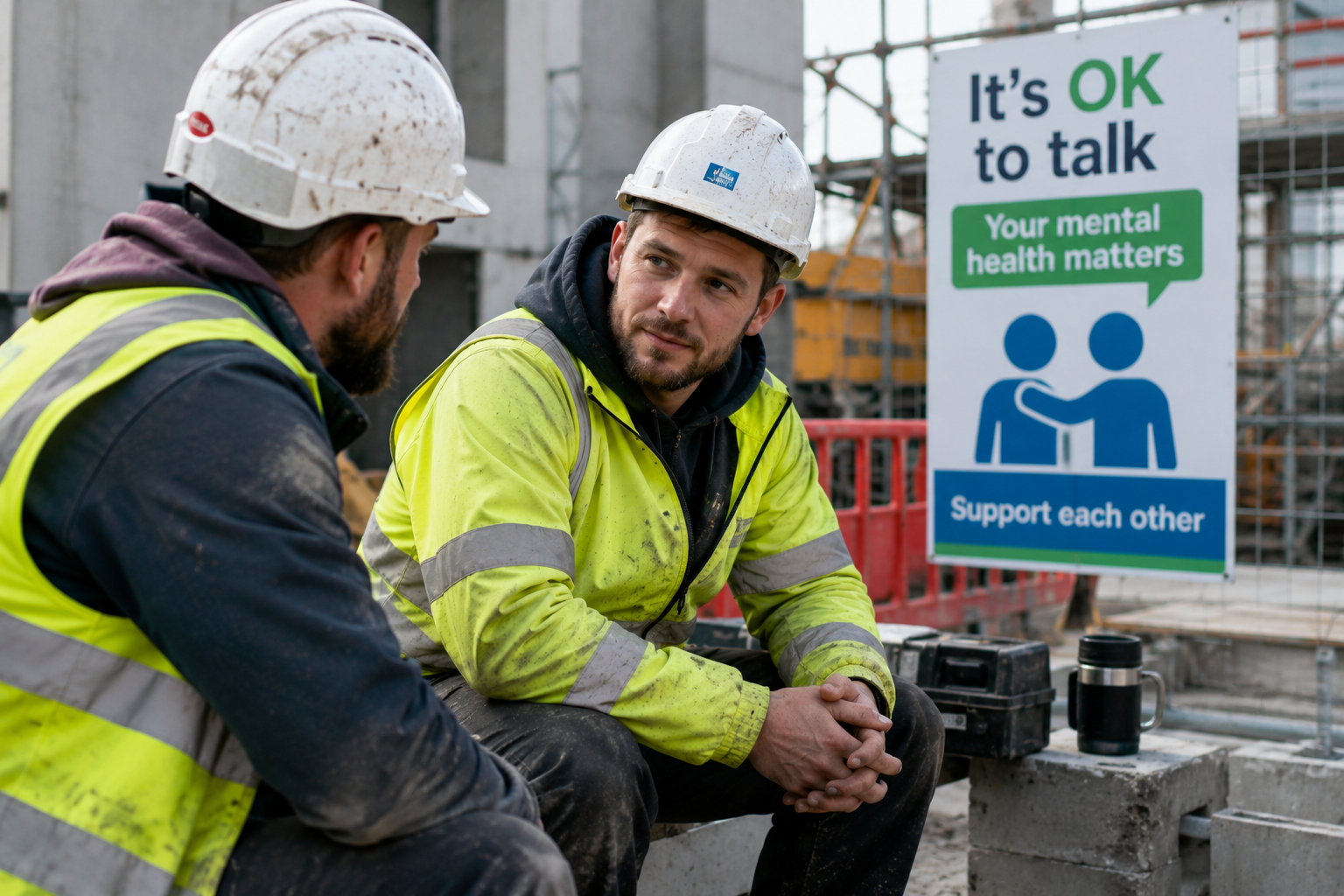
Mental health in UK construction has shifted from being a welfare concern to a core element of health and safety management. Construction workers grapple with unique pressures: tight deadlines, high-stress environments, and a transient workforce. These factors can take a heavy toll on psychological wellbeing. This guide offers practical steps for construction firms to weave mental health support into their existing health and safety strategies, moving beyond physical safety to foster a truly holistic workplace.
Proactive mental health measures not only protect employees but also cultivate a more productive and resilient workforce. With growing regulatory scrutiny and upcoming legislative changes, prioritising mental health is vital for any construction firm serious about its duty of care and long-term success.
Understanding the Legal and Regulatory Landscape
UK health and safety law requires employers to manage risks to both physical and mental health. The cornerstone legislation, the Health and Safety at Work etc. Act 1974 (HSWA), imposes a general duty on employers to ensure, so far as reasonably practicable, the health, safety, and welfare of all employees. This duty inherently includes mental health.
More explicitly, the Management of Health and Safety at Work Regulations 1999 (MHSWR) mandate suitable and sufficient risk assessments. These must identify hazards, including psychosocial risks like stress, excessive workloads, and poor work-life balance, which can lead to mental ill-health. HSE guidance reinforces this, urging employers to treat psychosocial risks with the same seriousness as physical ones. The Construction Leadership Council (CLC) has also highlighted mental health as a priority, signalling a sector-wide push for better strategies.
Step 1: Conduct Comprehensive Psychosocial Risk Assessments
Integrating mental health into health and safety strategies starts with understanding the specific psychosocial risks in your construction operations. Just as you assess risks for working at height or machinery use, you must systematically evaluate factors that could harm mental wellbeing. This involves identifying potential stressors, determining who might be affected, and deciding on necessary control measures.
- Identify Potential Stressors: Look for common construction industry stressors such as tight deadlines, long hours, remote sites, job insecurity, bullying, and high-risk tasks. Consider the impact of shift patterns and the transient nature of project-based work.
- Consult Your Workforce: Engage with employees through surveys, focus groups, and one-on-one discussions. Frontline workers often have the clearest insight into daily pressures and potential solutions. Ensure anonymity to encourage honest feedback.
- Review Existing Data: Analyse accident reports, sickness absence data, and turnover rates. Spikes in stress-related absences or high turnover may indicate underlying mental health issues.
- Document Findings and Control Measures: Record your findings in a formal risk assessment. For each identified risk, propose practical control measures, such as adjusting schedules, providing mental health training, or improving communication.
Regularly review these assessments to ensure they remain effective and adapt to changing project demands. This proactive approach aligns with HSE expectations for managing work-related stress.
Step 2: Implement Proactive Wellbeing Policies and Support Systems
Once risks are identified, the next step is to develop and implement clear policies and support systems that actively promote mental wellbeing. These initiatives should be accessible and clearly communicated to all employees, from site managers to subcontractors. A robust policy demonstrates a genuine commitment to employee welfare.
- Develop a Mental Health Policy: Create a standalone mental health policy or integrate mental health provisions into your existing health and safety policy. Outline your commitment to supporting mental wellbeing, procedures for seeking help, and anti-stigma statements.
- Appoint Mental Health First Aiders (MHFAs): Train a proportion of your workforce as MHFAs. These individuals can provide initial support to colleagues experiencing mental health issues, signpost them to professional help, and reduce stigma on site. The HSE provides guidance on the role of MHFAs.
- Establish Employee Assistance Programmes (EAPs): Offer access to confidential EAPs providing counselling, advice, and support for personal and work-related issues. Ensure employees know how to access these services and that they are truly confidential.
- Promote Work-Life Balance: Implement practices that support a healthy work-life balance, such as reasonable hours, flexible working arrangements where possible, and encouraging breaks. Tackle the culture of long hours prevalent in construction.
- Provide Line Manager Training: Equip line managers with skills to recognise signs of mental distress, have supportive conversations, and direct employees to appropriate resources. Managers play a key role in fostering a positive work environment.
Embed these systems within your company culture to ensure long-term impact and acceptance.
Step 3: Foster a Culture of Openness and Support
The most effective mental health strategies thrive in a culture where employees feel safe discussing their mental health without fear of judgment or repercussions. Breaking down stigma is critical, especially in a sector traditionally associated with stoicism.
Consistent messaging from senior leadership is essential. Leaders should visibly champion mental health initiatives and participate in awareness campaigns. Regular communication about available resources and success stories can help normalise conversations around mental wellbeing.
Encourage peer support networks and create informal opportunities for employees to connect and share experiences. Simple actions like regular check-ins, team-building activities, and promoting camaraderie can significantly contribute to a supportive atmosphere. Building an open culture is an ongoing process, requiring continuous effort and reinforcement from all levels of the organisation.
Step 4: Continuous Monitoring, Review, and Improvement
Like all aspects of health and safety, mental health strategies need continuous monitoring and review to ensure they remain effective and adapt to evolving needs. This iterative process helps organisations identify what works and where improvements are needed.
- Regular Policy Review: Annually review your mental health policy and procedures. Check if they are still relevant, understood, and effectively addressing workforce needs.
- Feedback Mechanisms: Establish clear channels for employees to provide feedback on mental health initiatives. Use anonymous surveys, suggestion boxes, or direct communication with MHFAs or HR.
- Data Analysis: Monitor key indicators such as stress-related sickness absence rates, EAP utilisation, and employee turnover. Trends can indicate the impact of your interventions.
- Incident Learning: If a mental health-related incident occurs, conduct a thorough investigation to understand root causes and identify lessons learned. Use these insights to refine your policies and preventative measures.
- Stay Informed: Keep up with new research, best practices, and legislative changes related to workplace mental health. Organisations like the HSE and CLC regularly publish updated guidance.
By committing to continuous improvement, construction firms can ensure their mental health strategies remain dynamic, responsive, and genuinely supportive of employee wellbeing.
Practical Mental Health Checklist for Construction Sites
Use this checklist to ensure your construction site actively promotes and protects mental health:
- Risk Assessments Completed: Have psychosocial risk assessments been conducted and regularly reviewed for all site activities and roles?
- Mental Health Policy Communicated: Is there a clear mental health policy in place, and has it been effectively communicated to all employees and subcontractors?
- Mental Health First Aiders (MHFAs) Available: Are trained MHFAs present on site, and are their identities and contact details clearly visible?
- EAP Access Promoted: Are employees aware of and encouraged to use confidential Employee Assistance Programmes or similar support services?
- Line Manager Training Provided: Have all site managers and supervisors received training on recognising mental health issues and supporting their teams?
- Work-Life Balance Measures: Are measures in place to promote reasonable working hours, breaks, and discourage excessive overtime?
- Anti-Stigma Campaigns: Are active campaigns running to reduce mental health stigma and encourage open conversations on site?
- Feedback Channels Open: Are there anonymous and accessible channels for employees to provide feedback on mental health support?
- Promotion of Physical Wellbeing: Are initiatives in place to encourage physical activity, healthy eating, and discourage substance misuse, which can impact mental health?
- Review and Improvement Cycle: Is there a scheduled process for reviewing the effectiveness of mental health initiatives and making improvements?
Conclusion
Prioritising mental health in UK construction is both an ethical duty and a legal requirement. By conducting psychosocial risk assessments, implementing proactive support systems, fostering an open culture, and committing to continuous improvement, construction companies can build more resilient, productive, and healthier workforces. This comprehensive approach goes beyond traditional safety, creating environments where employees feel valued and supported, ultimately contributing to a stronger, more sustainable construction industry.
Frequently Asked Questions

Is mental health covered under UK health and safety law?
Yes, UK health and safety law, including the Health and Safety at Work etc. Act 1974 (HSWA), requires employers to manage risks to both physical and mental health. The Management of Health and Safety at Work Regulations 1999 (MHSWR) also mandates risk assessments that must identify psychosocial risks like stress and excessive workloads.
What are psychosocial risks in construction?
Psychosocial risks in construction include factors like stress, tight deadlines, high-pressure environments, poor work-life balance, and transient workforce dynamics. These can significantly impact mental health and must be addressed in risk assessments under UK health and safety regulations.
Do employers need to assess mental health risks?
Yes, employers are legally required to conduct suitable and sufficient risk assessments under the Management of Health and Safety at Work Regulations 1999 (MHSWR). These assessments must identify psychosocial risks that could lead to mental ill-health, alongside physical hazards.
Why is mental health important in construction H&S strategies?
Mental health is crucial in construction H&S strategies because construction workers face unique pressures that can harm psychological wellbeing. Prioritising mental health not only fulfills legal duties but also fosters a more productive and resilient workforce.
What role does the Construction Leadership Council (CLC) play in mental health?
The Construction Leadership Council (CLC) has identified mental health as a priority, advocating for better strategies across the sector. This highlights the growing importance of integrating mental health support into construction health and safety frameworks.
How can construction firms address mental health risks?
Construction firms can address mental health risks by conducting comprehensive psychosocial risk assessments, identifying stressors like tight deadlines and high-pressure environments, and implementing proactive measures to support employee wellbeing.