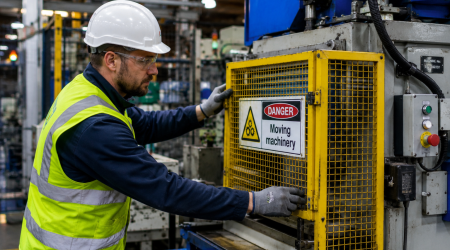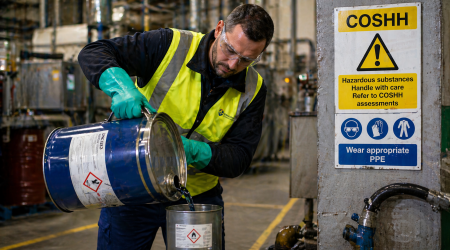
Lathe safety remains a pressing concern in UK manufacturing. Despite clear regulations, preventable accidents still occur with alarming frequency. HSE statistics reveal machinery incidents, including lathe operations, continue to cause life-changing injuries and fatalities. One recent case saw a firm fined heavily after workers were exposed to rotating parts and allowed to use emery cloth by hand on moving machinery. This guide walks through the essential steps to protect your workforce while meeting legal obligations under UK health and safety law.
Understanding Lathe Hazards and Risks
Lathes transform materials with precision, but their rotating parts create multiple danger zones. The primary risk comes from entanglement hazards – loose clothing, hair or body parts can be caught in chucks or workpieces spinning at high speeds. Swarf, the razor-sharp metal shavings produced during machining, presents cutting and eye injury risks. Workpieces or broken tools can become dangerous projectiles if improperly secured.
Common Injury Mechanisms
Most lathe injuries follow predictable patterns:
- Entanglement: Rotating chucks or workpieces can grab clothing, jewellery or limbs in milliseconds, often causing amputations or crush injuries.
- Impact and Ejection: Poorly secured workpieces or shattered tools become high-speed missiles capable of causing head trauma.
- Cuts and Punctures: Sharp swarf and burrs slice through skin easily, especially during manual removal attempts.
- Abrasion Burns: Brief contact with rotating surfaces can strip skin through friction alone.
- Crushing: Moving components like tailstocks can trap fingers against fixed structures.
- Eye Injuries: Flying metal fragments and coolant spray pose permanent vision risks without proper protection.
Recognising these hazards forms the foundation for effective prevention strategies. The next step involves implementing controls that address each risk systematically.
The UK Legal Framework for Machine Safety
UK law sets clear expectations for machinery safety. The Health and Safety at Work etc. Act 1974 establishes the baseline duty for employers to protect workers. Breaches can lead to unlimited fines and imprisonment, making compliance a legal and moral imperative.
Specific Regulations and ACOPs
Several key regulations provide detailed requirements:
- PUWER 1998: Mandates suitable, maintained equipment with proper guarding and operator training
- MHSWR 1999: Requires thorough risk assessments and control measures
- Workplace Regulations 1992: Covers environmental factors like lighting and ventilation
- PPE Regulations 1992: Governs protective equipment when other controls aren’t enough
The HSE’s Approved Codes of Practice offer practical guidance on meeting these legal standards. While not law themselves, courts consider them when assessing compliance.
Penalties for Non-Compliance
Fines now reach millions for serious breaches. Directors face disqualification under the Company Directors Disqualification Act 1986, with potential two-year prison sentences for individuals. The HSE actively prosecutes cases where safety failings endanger workers.
Step-by-Step Guide to Lathe Risk Assessment
Conducting proper risk assessments isn’t optional – it’s required by law. The process identifies hazards and implements controls to reduce risks to acceptable levels.
Step 1: Identify the Hazards
Examine each lathe operation for:
- Mechanical dangers (rotating parts, swarf, ejection risks)
- Non-mechanical hazards (noise, vibration, electrical issues)
- Environmental factors (lighting, ventilation, housekeeping)
Step 2: Decide Who Might Be Harmed
Consider all affected groups:
- Operators (most at risk)
- Nearby workers
- Maintenance staff
- Young or inexperienced employees
Step 3: Evaluate Risks and Implement Controls
Apply the hierarchy:
- Eliminate hazards where possible
- Use engineering controls like guards
- Implement safe working procedures
- Provide PPE as a last resort
Step 4: Record and Implement Findings
Document your assessment and act on its conclusions. Paperwork alone won’t prevent injuries.
Step 5: Review Regularly
Update assessments when equipment, processes or incidents warrant changes. Annual reviews represent the minimum frequency.
Implementing Effective Machine Guarding and Safety Devices
Proper guarding forms the first line of defence against lathe hazards. PUWER requires protection from dangerous moving parts through appropriate barriers and devices.
Types of Guards
- Fixed guards: Permanent barriers for areas needing infrequent access
- Interlocked guards: Prevent operation when open and stop machines if breached
- Adjustable guards: Accommodate different setups while maintaining protection
Supplementary Safety Devices
Enhance protection with:
- Emergency stop buttons
- Braking systems
- Chuck guards with interlocks
- Swarf shields
Installation and Maintenance
Guards only work when properly installed and maintained. Regular inspections by competent persons ensure continued effectiveness. Never tolerate guard removal or bypassing – it’s both dangerous and illegal.
Operator Training and Competence
Skilled operators form the human element of machine safety. PUWER and other regulations mandate proper training for anyone using lathes.
Key Training Elements
Effective programmes cover:
- Machine-specific hazards and controls
- Safe operating procedures
- Emergency response
- Correct PPE use
- Maintenance protocols
Ensuring Competence
Training alone isn’t enough. Employers must:
- Assess individual capability
- Provide tailored instruction
- Supervise new operators closely
- Offer refresher courses regularly
The dangerous practice of hand-holding emery cloth on rotating workpieces highlights why training must explicitly prohibit unsafe shortcuts.
Practical Compliance Checklist for Lathe Safety
Use this checklist to audit your current arrangements:
- Risk Assessment – Complete, documented and up-to-date?
- Machine Guarding – All dangerous parts properly protected?
- Emergency Stops – Working and accessible?
- Safe Systems – Clear procedures for all tasks?
- Operator Training – Comprehensive and recorded?
- PPE – Suitable protection provided and used correctly?
- Maintenance – Regular inspections and servicing?
- Workplace – Clean, well-lit and ventilated?
Conclusion
Preventing lathe injuries requires more than compliance tick-boxes. It demands a proactive safety culture combining engineering controls, robust procedures and competent operators. The legal and human costs of failure are too severe to ignore. Review your current arrangements against this guide today – your workforce’s safety depends on it.
Frequently Asked Questions
Is it legal to use emery cloth on moving lathe workpieces?
No. The article references a case where a company was fined for allowing workers to use emery cloth on moving machinery. The Provision and Use of Work Equipment Regulations 1998 (PUWER) strictly prohibit hand-held work on rotating parts due to the extreme entanglement risk.
What PPE is mandatory for lathe operators in the UK?
At minimum, operators require close-fitting clothing, safety footwear, and CE-marked eye protection meeting BS EN 166 standards. The HSE specifically warns against loose garments, jewellery, or gloves that could be caught in rotating machinery.
How often should lathe guarding systems be inspected?
PUWER Regulation 5 requires daily pre-use checks by operators and formal inspections at suitable intervals. The article implies inspections should occur whenever work conditions change, following HSE guidance on machinery maintenance.
What constitutes adequate guarding for lathes under UK law?
Guards must prevent access to rotating chucks, drive systems and workpieces during operation, as required by PUWER Regulation 11. Fixed guards are preferred, with interlocked systems where frequent access is needed. The article highlights entanglement hazards that proper guarding mitigates.
Can workers remove guards for maintenance without precautions?
No. The article's reference to HSE enforcement actions confirms that guard removal requires lockout/tagout procedures under the Electricity at Work Regulations 1989. Energy sources must be isolated and verified safe before any guard interference occurs.