Every year in the UK, hazardous substances at work cause thousands of preventable illnesses. The Control of Substances Hazardous to Health (COSHH) Regulations 2002 exist to stop this. They form a vital part of workplace safety, protecting employees from asthma, dermatitis and cancers linked to chemical exposure. HSE statistics show about 12,000 annual deaths relate to past workplace chemical exposure. This guide explains your COSHH obligations clearly, from legal requirements to practical control measures across different industries.
The Legal Framework of COSHH Regulations UK
The COSHH Regulations 2002 place clear duties on employers regarding hazardous substances. These apply not just to employees but also contractors, visitors and the public when affected by workplace activities. Backed by the Health and Safety at Work etc. Act 1974, COSHH requires employers to assess risks and control exposures effectively.
Key regulations include:
– Risk assessment (Regulation 6)
– Preventing or controlling exposure (Regulation 7)
– Monitoring exposure (Regulation 10)
– Health surveillance (Regulation 11)
– Information and training (Regulation 12)
The HSE’s Approved Code of Practice (L5) provides practical compliance guidance. While not legally binding, courts view following it as evidence of compliance. Ignoring it could prove costly in prosecution.
Enforcement is strict. In 2022, one company faced £1.2 million fines after chemical burns injured a worker. The HSE can issue Improvement Notices or immediate Prohibition Notices for serious risks. Directors may face unlimited fines or even imprisonment for breaches.
Key Legislation and Guidance:
* Health and Safety at Work etc. Act 1974: The overarching framework.
* Control of Substances Hazardous to Health Regulations 2002 (COSHH): Specific duties regarding hazardous substances.
* L5 Approved Code of Practice and Guidance: Practical advice for compliance.
* EH40/2005 Workplace Exposure Limits: Lists specific exposure limits for many substances.
Identifying Hazardous Substances in Your Workplace
Spotting hazardous substances is step one. They come in many forms – chemicals, fumes, dusts, biological agents and more. Even everyday materials like flour dust or wood shavings can pose risks if uncontrolled.
Create a comprehensive inventory by:
– Walking through all work areas
– Consulting purchasing records
– Talking to staff about materials they use
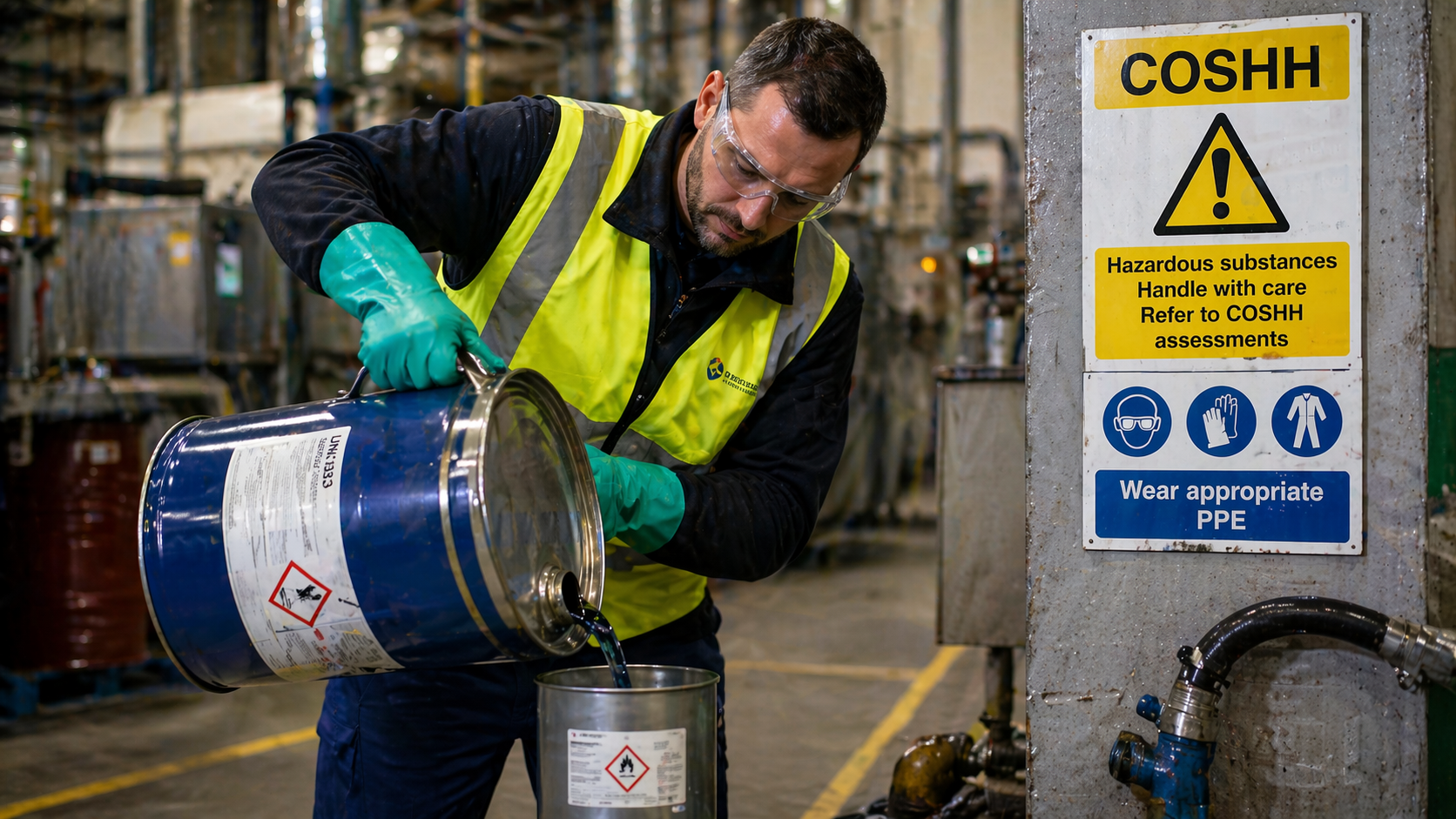
– Checking product labels for hazard symbols
Safety Data Sheets (SDS) from suppliers provide essential hazard information. These 16-section documents detail everything from chemical properties to first aid measures. Always use the most recent version.
Don’t forget substances created by work processes. Welding fumes, silica dust from cutting stone, or even waste products need assessing. Biological hazards like legionella in water systems also fall under COSHH.
Sources for Identifying Hazardous Substances:
* Safety Data Sheets (SDS): Provided by suppliers for chemicals.
* Product Labels: Hazard pictograms and warning statements.
* Work Processes: Substances generated by activities (e.g., welding fumes, wood dust).
* Biological Agents: Bacteria, viruses, moulds (e.g., legionella, healthcare pathogens).
* Naturally Occurring Substances: Radon, asbestos (though asbestos has its own specific regulations, COSHH principles apply to other naturally occurring hazards).
* Employee Input: Workers often know which substances they use daily.
* Purchasing Records: A good way to track all materials entering the workplace.
Conducting a COSHH Risk Assessment: A Step-by-Step Guide
A proper COSHH risk assessment is your blueprint for safety. Regulation 6 requires it, and it must be done by someone competent. Treat it as a living document – review it regularly and update when circumstances change.
Step 1: Gather Information
* List all hazardous substances
* Collect up-to-date SDS sheets
* Document how substances are used, stored and disposed of
* Identify who might be exposed
* Review past incidents involving hazardous substances
Step 2: Evaluate the Risks
Assess each substance’s specific hazards and how workers might be exposed – through inhalation, skin contact, ingestion or injection. Consider exposure likelihood and severity based on quantity used, frequency and existing controls. Compare potential exposures against Workplace Exposure Limits where applicable.
Step 3: Determine Control Measures (Hierarchy of Control)
Apply controls systematically:
1. Elimination: Remove the hazard completely if possible
2. Substitution: Use less hazardous alternatives
3. Engineering Controls: Enclose processes or install extraction
4. Administrative Controls: Safe working procedures and training
5. PPE: Only as a last resort when other controls aren’t enough
Step 4: Record, Implement, and Review
Document your findings and actions. Put controls in place, monitor their effectiveness, and provide proper training. Conduct health surveillance where needed. Review the assessment annually or when changes occur.
Understanding Workplace Exposure Limits (WELs) and Their Application
Workplace Exposure Limits (WELs) are legal maximums for airborne substance concentrations. Published in HSE’s EH40/2005 document, they come in two types:
– Long-term (8-hour average)
– Short-term (15-minute average)
WELs aren’t safe thresholds – exposures should always be kept as low as reasonably practicable. Monitoring helps check if controls work and WELs are met. For crystalline silica dust, the WEL is 0.1 mg/m³ over 8 hours. Regular air monitoring ensures compliance.
When monitoring shows WELs being approached:
– Review existing controls
– Improve extraction systems
– Modify work practices
– Consider better PPE
Health surveillance becomes crucial for substances that can cause sensitisation or irreversible harm. Workers should understand WELs and what they mean for their safety.
Implementing Effective Control Measures and the Hierarchy of Control
COSHH Regulation 7 requires a systematic approach to controls. The hierarchy prioritises eliminating hazards over relying on PPE.
1. Elimination: The gold standard. If a process doesn’t need a hazardous chemical, don’t use it.
2. Substitution: Swap for safer alternatives, like water-based paints instead of solvent-based.
3. Engineering Controls:
– Enclose processes completely
– Install Local Exhaust Ventilation (LEV)
– Modify processes to reduce exposure
4. Administrative Controls:
– Safe working procedures
– Limiting exposure time
– Good housekeeping
– Clear signage
5. PPE: Only when other controls can’t reduce risk sufficiently. Must be suitable, properly maintained and workers trained in its use.
LEV systems need thorough examination and testing at least every 14 months (COSHH Regulation 9). Proper maintenance ensures they remain effective.
Monitoring, Health Surveillance, and Emergency Procedures
Ongoing monitoring confirms controls work. Air monitoring checks substance levels against WELs. Biological monitoring (urine/blood tests) may be needed for some substances.
Health surveillance detects early signs of ill health. It’s legally required when:
– A substance is linked to identifiable diseases
– There’s reasonable likelihood of harm
– Valid detection methods exist
Emergency plans must cover:
– Evacuation procedures
– Spill response
– First aid measures
– Firefighting methods
– Emergency contacts
Train staff thoroughly and conduct regular drills. Keep appropriate emergency equipment like eyewash stations and spill kits readily available.
COSHH in Specific Industries: Tailored Approaches
Manufacturing and Engineering:
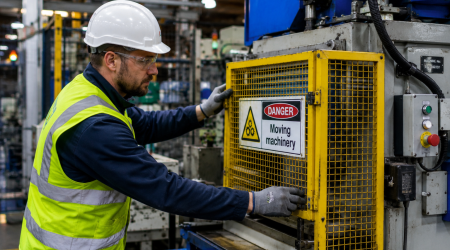
Common hazards include metalworking fluids, welding fumes and solvents. Controls focus on LEV, enclosure and RPE where needed. Health surveillance checks for dermatitis and asthma.
Healthcare and Laboratories:
Biological agents and chemicals predominate. Biological Safety Cabinets, fume cupboards and strict handling procedures are essential. Vaccinations may be required.
Construction:
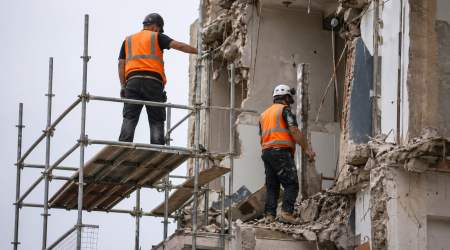
Silica dust from cutting materials is a major risk. Wet cutting methods, on-tool extraction and RPE help control exposure. Regular lung function tests monitor workers’ health.
Food and Drink Industry:
Flour dust and cleaning chemicals pose risks. Enclosed handling systems, LEV and good hygiene practices are key controls. Monitor for occupational asthma.
The Role of Information, Instruction, and Training
COSHH Regulation 12 makes training mandatory. Workers need to understand:
– Substance hazards
– Control measures
– Emergency procedures
– PPE use
– Monitoring results
Training should combine theory with practical demonstrations. Refresh it regularly, especially when introducing new substances or processes. Make sure information is clear and accessible to all staff.
Consider a cleaner using corrosive disinfectant. Without proper training, they might not wear gloves, risking skin burns. Or they might mix chemicals, creating toxic fumes. Comprehensive training prevents such incidents.
Conclusion: Sustaining COSHH Compliance for a Safer Workplace
Effective COSHH management protects workers and avoids legal consequences. It requires ongoing effort – from initial risk assessment through to monitoring and training. The human cost of getting it wrong is too high, with thousands suffering preventable illnesses annually.
Start by reviewing your current COSHH assessments. Ensure they’re comprehensive, up-to-date and properly communicated. This commitment to safety benefits everyone in your workplace.
For further authoritative guidance, please refer to the official HSE COSHH website and The Control of Substances Hazardous to Health Regulations 2002.
Frequently Asked Questions

What are the main duties of employers under COSHH Regulations?
Under the COSHH Regulations 2002, employers must assess risks, prevent or control exposure, monitor exposure levels, provide health surveillance, and ensure employees receive adequate information and training. These duties are outlined in Regulations 6, 7, 10, 11, and 12 respectively.
Who is protected under COSHH Regulations?
COSHH protects not only employees but also contractors, visitors, and the public when they may be affected by workplace activities involving hazardous substances. This broad scope ensures comprehensive safety measures are in place.
What is the role of the HSE's Approved Code of Practice (L5) in COSHH compliance?
The HSE's Approved Code of Practice (L5) provides practical guidance for complying with COSHH Regulations. While not legally binding, courts view adherence to L5 as evidence of compliance, and ignoring it could lead to prosecution and penalties.
What are the consequences of failing to comply with COSHH Regulations?
Non-compliance with COSHH can result in strict enforcement actions, including Improvement Notices, Prohibition Notices, unlimited fines, and even imprisonment for directors. For example, in 2022, one company faced £1.2 million in fines after a worker suffered chemical burns.
What industries are most affected by COSHH Regulations?
COSHH Regulations apply to all industries where hazardous substances are present, including manufacturing, construction, healthcare, and cleaning. Employers in these sectors must implement specific control measures to protect workers from chemical exposure.
How often should COSHH risk assessments be reviewed?
COSHH risk assessments should be reviewed regularly, particularly when there are significant changes in work processes, substances used, or new HSE guidance. Regular reviews ensure that control measures remain effective and compliant with current standards.