For safety and compliance professionals, identifying the most frequent and consequential risks is the foundation of an effective workplace safety programme. Understanding these hazards enables organisations to reduce incidents, control exposures, improve employee well-being, and demonstrate regulatory due diligence. This comprehensive guide expands on the ten hazards that consistently drive incidents, regulatory enforcement, civil litigation, and lost productivity across industries. Each section outlines best-practice controls, industry examples, common mistakes, and compliance expectations to help you implement improvements immediately.
Common workplace hazards: the expanded top 10
1. Slips, trips, and falls
Why it matters: Slips, trips, and falls remain a top cause of non-fatal workplace injuries worldwide. According to HSE and OSHA, they account for a significant proportion of workplace compensation claims and lost working days. These incidents often arise from poor housekeeping, wet surfaces, uneven flooring, inadequate lighting, or cluttered walkways.
Controls and best practices
Controls should begin with engineering design: specify slip-resistant flooring, eliminate elevation changes, and ensure proper drainage. Administrative controls include structured housekeeping schedules, documented cleaning logs, and footwear policies aligned with the environment. Use lighting audits to ensure walkways and stairwells meet recommended lux levels, and apply anti-slip coatings where appropriate.
Industry-specific examples
- Manufacturing: Coolant overspray creates slippery surfaces; anti-slip mats and splash guards reduce risk.
- Hospitality: Wet floors near kitchens and entryways require rapid-response cleaning protocols.
- Construction: Temporary trip hazards from materials, cables, or uneven ground must be controlled through housekeeping and site layout planning.
Common mistakes
Relying solely on wet-floor signs, inconsistent cleaning routines, poor hazard reporting culture, and failing to track repeat areas of concern through incident trends.
Compliance considerations
HSE (UK) requires employers to manage slip and trip risks under the Workplace (Health, Safety and Welfare) Regulations. OSHA (US) mandates safe walking/working surfaces under 29 CFR 1910.22. Maintain documentation of testing, inspections, and control measures.
Case example
A UK distribution centre reduced slip incidents by 60% after implementing a new floor-cleaning system, marking pedestrian routes, and conducting quarterly slip-resistance testing.
2. Manual handling and ergonomic injuries
Why it matters: Musculoskeletal disorders (MSDs) are a leading cause of long-term absenteeism and compensation costs. These injuries—from lifting, repetitive motion, awkward postures, and forceful exertion—have significant productivity impacts and may become chronic if unmanaged.
Controls and best practices
Use ergonomic redesign principles: raise or lower workstations, reduce reach distances, improve tool design, and introduce lift assists or conveyors. Apply risk assessment tools such as the NIOSH Lifting Equation, HSE’s MAC Tool, or RULA/REBA assessments to quantify ergonomic load.
Industry-specific examples
- Healthcare: Manual patient handling is a major cause of MSDs; hoists and slide sheets reduce risk.
- Warehousing: Repetitive picking requires rotation schedules and ergonomic station design.
- Office settings: Poor workstation ergonomics lead to chronic back, neck, and wrist injuries.
Common mistakes
Providing training without engineering controls, no post-change evaluation after redesign, and failing to engage workers in ergonomic improvements.
Compliance considerations
HSE’s Manual Handling Operations Regulations (UK) and OSHA’s General Duty Clause (US) require employers to reduce MSD risks. Health surveillance may be required for high-risk roles.
3. Hazardous substances and chemical exposures
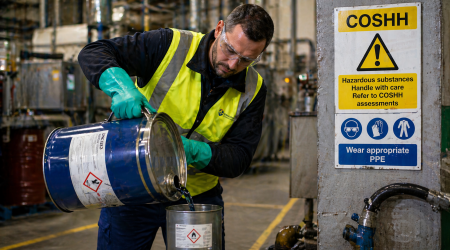
Why it matters: Exposure to hazardous substances—including carcinogens, solvents, acids, and airborne contaminants—can cause acute injuries, chronic illness, or fatalities. Poor chemical control remains a major source of regulatory penalties.
Controls and best practices
Follow the COSHH hierarchy: eliminate, substitute, enclose, ventilate, and finally apply PPE. Conduct air monitoring to compare exposures with Occupational Exposure Limits (OELs). Maintain updated Safety Data Sheets (SDS). Ensure LEV systems meet HSE or OSHA performance requirements.
Industry-specific examples
- Manufacturing: Weld fume requires extraction and routine monitoring.
- Laboratories: Chemical handling demands fume cupboards and strict inventory control.
- Cleaning operations: Mixing chemicals creates inhalation and burn hazards.
Common mistakes
Relying on PPE alone, failing to test ventilation systems annually, and inadequate chemical labelling.
Compliance considerations
UK: COSHH Regulations require employers to assess, control, and monitor exposure.
US: OSHA Hazard Communication Standard 1910.1200 mandates SDS access, labelling, and employee training.
4. Machinery hazards and moving parts
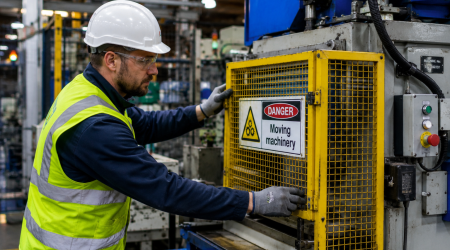
Why it matters: Machinery incidents often result in severe injuries, including amputations, crushing, or entanglement. Many incidents occur during maintenance or when guards are removed for speed or convenience.
Controls and best practices
Install physical guards, interlocks, emergency stops, and isolation procedures. Conduct PUWER (UK) or OSHA Machine Guarding (1910 Subpart O) assessments regularly. Train staff thoroughly in Lockout/Tagout (LOTO) procedures.
Industry-specific examples
- Timber processing: High-speed saws require interlocking guards.
- Food manufacturing: Mixers and conveyors pose entanglement risks.
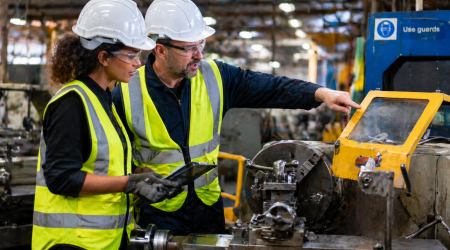
- Engineering workshops: Lathes and presses present crush zones.
Common mistakes
Not verifying LOTO steps, bypassing interlocks, and modifying equipment without re-risk-assessment.
Compliance considerations
OSHA’s 1910.147 LOTO standard and PUWER (UK) require documented controls, inspections, and competency training.
5. Electrical hazards
Why it matters: Electrical hazards—shock, arc flash, and electrocution—remain a top cause of fatal incidents. Inadequate bonding, outdated equipment, or unauthorised access to live systems increase risk significantly.
Controls and best practices
Conduct arc-flash studies, label panels, ensure correct PPE categories, install RCD/GFCI protection, and enforce electrical work permits. Provide training aligned to NFPA 70E or UK equivalents.
Industry-specific examples
- Construction: Temporary electrical systems pose a high risk.
- Manufacturing: Live maintenance during breakdowns is a major hazard.
- Facilities management: Inadequate testing of installations increases risk.
Common mistakes
Allowing unqualified persons to work on electrical installations, poor lockout discipline, and failure to maintain earthing systems.
Compliance considerations
UK: Electricity at Work Regulations.
US: OSHA 1910 Subpart S and NFPA 70E.
6. Working at height
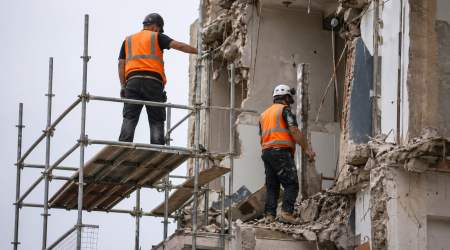
Why it matters: Falls from height are the leading cause of workplace fatalities in construction and one of the most serious hazards in general industry.
Controls and best practices
Use the hierarchy: avoid work at height, then apply collective protection (guardrails, platforms). When PFAS is required, ensure anchor certification, rescue planning, and routine inspection of equipment.
Industry-specific examples
- Roofing: Fragile surfaces and unprotected edges demand fall-prevention systems.
- Warehousing: Order-picking platforms require guardrails and training.
- Energy sector: Tower and turbine work requires full rescue capabilities.
Compliance considerations
UK: Work at Height Regulations.
US: OSHA 1926 Subpart M (Construction) and 1910 Subpart D (General Industry).
7. Confined spaces
Why it matters: Confined spaces present atmospheric hazards, entrapment risks, drowning, or engulfment. Many fatalities occur when rescuers enter without proper controls.
Controls and best practices
Implement a documented permit-to-work system, atmospheric testing with calibrated detectors, continuous ventilation, and standby rescue arrangements.
Industry-specific examples
- Utilities: Sewer and tank entry hazards.
- Manufacturing: Vessels, pits, and silos.
- Construction: Trenches, crawl spaces, and chambers.
Compliance considerations
UK: Confined Spaces Regulations.
US: OSHA 1910.146 Permit-Required Confined Spaces.
8. Noise and vibration
Why it matters: Chronic exposure to high noise causes irreversible hearing damage, and hand–arm vibration syndrome (HAVS) remains a significant risk in many industries.
Controls and best practices
Conduct baseline exposure assessments, engineer quieter tools/processes, apply vibration-damping materials, and implement hearing conservation or HAVS monitoring programmes.
Industry-specific examples
- Construction: Use of breakers, grinders, and drills.
- Manufacturing: Continuous noise from plant equipment.
- Forestry: Chainsaws and handheld tools.
Compliance considerations
UK: Control of Noise at Work Regulations & Control of Vibration at Work Regulations.
US: OSHA 1910.95 occupational noise exposure.
9. Vehicle and mobile plant incidents
Why it matters: Vehicle/pedestrian interactions cause some of the most severe workplace injuries, particularly in warehouse, manufacturing, and construction environments.
Controls and best practices
Separate pedestrians and vehicles using barriers or marked routes. Apply speed controls, reversing alarms, proximity sensors, and telematics where appropriate. Conduct operator competency verification.
Industry-specific examples
- Warehousing: Forklift–pedestrian collisions.
- Construction: Dumpers, telehandlers, and excavators.
- Logistics: Loading dock injuries from trailer movement.
10. Psychosocial hazards and workplace violence
Why it matters: Stress, bullying, burnout, aggression, and violence undermine safety culture and create downstream physical and mental health risks. These issues also influence error rates, absenteeism, and turnover.
Controls and best practices
Conduct psychosocial risk assessments, strengthen reporting pathways, implement anti-bullying policies, and ensure workload and rostering are monitored. In higher-risk environments, install protective barriers, alarm systems, and security support.
Industry-specific examples
- Healthcare: Aggression from patients and visitors.
- Retail: Customer conflict and robbery risk.
- Social services: Lone worker violence risk.
Prioritising controls and where to start
Not all hazards can be addressed at once. Use a structured, risk-based approach: score hazards by severity, likelihood, regulatory exposure, and incident history. Prioritise high-consequence hazards, implement engineering controls first, and verify improvements using leading indicators such as near-miss trends and inspection pass rates.
Implementation pitfalls and practical tips
- Engage workers early—practical insight prevents poor design decisions.
- Standardise templates for hazard identification, LOTO, and audits.
- Use objective measurement tools (airflow, vibration levels, decibel readings).
- Establish long-term sustainment plans, including ownership and review cycles.
Conclusion — key takeaways
Understanding common workplace hazards—and the organisational missteps that allow them to persist—empowers safety professionals to target efforts effectively. Apply the hierarchy of controls, validate engineering solutions, strengthen reporting culture, and address psychosocial and contractor risks. A proactive, risk-based approach helps create safer, more resilient workplaces and reduces incidents across all sectors.
Frequently Asked Questions (FAQs)

What are the most common workplace hazards employers should watch for?
Slips and trips, manual handling injuries, chemical exposures, machinery hazards, electrical risks, working at height, confined spaces, noise and vibration, vehicle incidents, and psychosocial hazards are the top recurring risks across industries.
How can businesses reduce slips, trips, and falls?
Keep floors clean, improve lighting, fix uneven surfaces, and use anti-slip materials. Regular inspections and housekeeping routines help prevent most incidents.
Why are manual handling injuries so common at work?
They often happen due to poor ergonomics, incorrect lifting techniques, or repetitive movements. Training and workstation redesign can significantly reduce these injuries.
What controls help reduce chemical and hazardous substance risks?
Use substitution where possible, maintain local exhaust ventilation, keep Safety Data Sheets up to date, and train workers on safe handling procedures.
How can employers improve safety around machinery and moving parts?
Install machine guards, maintain interlocks, enforce lockout/tagout procedures, and ensure only trained staff operate or service equipment.