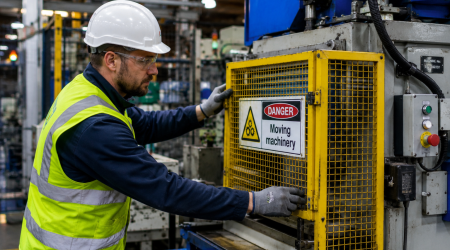
Personal protective equipment (PPE) remains a last line of defense when engineering and administrative controls cannot fully eliminate hazards. This guide lays out clear, actionable PPE guidelines for all employees so compliance officers and safety professionals can implement, audit, and continuously improve PPE programs. It focuses on selection based on risk, fit and competency requirements, maintenance and replacement practices, and program-level controls that meet regulatory expectations and reduce residual risk in the workplace.
PPE Guidelines for All Employees: Core principles
Effective PPE programs are built on four interdependent principles: risk-based selection, competent users, reliable maintenance and storage, and management oversight. When these elements are documented and enforced, PPE works as intended—protecting workers while supporting operational needs and regulatory compliance.
1. Risk-based selection
Begin every PPE decision with a documented hazard assessment. Identify the hazard type (impact, penetration, chemical, biological, thermal, respiratory, etc.), exposure duration, and foreseeable misuse. Match the hazard to certified PPE using recognized standards (ANSI, ASTM, NIOSH). For example:
- High-energy impact tasks: certified safety helmets and face shields rated to the task.
- Chemical handling: splash-rated goggles plus chemical-resistant gloves and aprons with compatible material resistance charts.
- Respiratory hazards: NIOSH-approved respirators with assigned protection factors aligned to the measured exposure and task.
2. Fit, sizing, and compatibility
PPE must fit the wearer and be compatible with other equipment. Poor fit undermines protection and can introduce new hazards (e.g., hard hats knocking goggles loose). Implement fit testing where required (respirators) and routine sizing checks for gloves, footwear, and eye protection. Maintain a sizing inventory that reflects the demographic mix of your workforce.
Training and competency
Training is not optional. Employees need to know when PPE is required, how to correctly don/doff, how to inspect and maintain equipment, and the limits of protection. Use a competency-based approach:
- Deliver initial classroom or toolbox training covering selection rationale and limitations.
- Provide hands-on demonstrations and supervised practice for donning/doffing and inspection.
- Validate competency annually or whenever tasks or equipment change.
Document training records and attach them to employee files. For respirators, integrate medical evaluation, fit testing, and record-keeping per OSHA respiratory protection requirements (OSHA PPE guidance).
Real-world example: Manufacturing line
At a mid-size fabrication plant we worked with, a local risk assessment identified intermittent molten metal splatter and frequent short-term chemical cleaning. The combined solution was flame-resistant clothing, face shields for pouring operations, and chemical-resistant gloves used only for cleaning tasks—with a strict rule that chemical gloves must be removed before touching tools. The policy reduced glove-related contamination incidents by 60% within six months.
Maintenance, storage, and replacement
Neglecting maintenance renders PPE ineffective. Establish written procedures for inspection frequency, cleaning, repair, and end-of-life replacement criteria. Key points:
- Daily or pre-use inspections for critical PPE (respirators, harnesses, electrical gloves).
- Use manufacturer guidance for cleaning agents and frequency; record cleaning for shared PPE.
- Retire PPE based on manufacturer life limits, visible damage, or failed inspections. Do not attempt field repairs beyond manufacturer-authorized fixes.
Label storage areas, control environmental conditions (avoid UV exposure for some plastics), and track issued PPE using asset tags or a simple inventory sheet. For reusable respirators and fit-critical gear, assign to the individual when feasible to improve accountability.
Program management and regulatory compliance
PPE must be part of an integrated safety program. Key administrative controls include written policies, assigned program coordinator, budgeted replacement cycles, and regular audits. Best practices:
- Designate a PPE program manager responsible for assessments, procurement, and records.
- Include PPE review in routine safety audits and incident investigations.
- Benchmark against standards from NIOSH/CDC and consensus standards bodies to stay current (NIOSH).
When auditing, verify evidence of hazard assessments, training records, fit tests, inspection logs, and procurement justification for selected PPE. Use corrective action plans with deadlines and responsible parties to address nonconformities.
Procurement and cost control
Cost pressure often leads to under-protection. Use life-cycle cost analysis rather than unit price—consider durability, cleaning costs, and replacement frequency. Where feasible, list approved vendors and standardized models to reduce variability and simplify training and spare stocking.
Monitoring and continuous improvement
Set measurable KPIs: PPE-related incident rate, fit-test pass rate, percentage of employees trained, and average time-to-replace damaged PPE. Use near-miss reporting to capture PPE failures before injury occurs. Regularly review incident data and field feedback to refine selection and training.
Example KPI: after instituting quarterly toolbox demos and a two-week replacement stock policy, a logistics firm achieved a 40% reduction in PPE-related stoppages and improved worker acceptance.
Conclusion / Key takeaways
Adopting clear, enforceable PPE guidelines for all employees starts with a documented hazard assessment and continues through selection, fit, training, maintenance, and program governance. For compliance officers and safety professionals, emphasize competency validation, lifecycle management, and measurable program metrics. Implement these steps consistently to reduce risk and demonstrate regulatory due diligence.
Frequently Asked Questions (FAQ)

Why is a hazard-based approach essential when selecting PPE for employees?
A hazard-based approach ensures that the selected personal protective equipment matches the specific risks (impact, penetration, chemical, biological, thermal, respiratory) identified through a documented assessment. It supports compliance with standards like ANSI, ASTM, and NIOSH, and helps avoid under- or over-protection.
What key elements should a PPE training and competency programme include?
A robust PPE programme should cover initial classroom or toolbox instruction, hands-on practice for donning and doffing PPE, fit-testing (especially for respirators), annual re-assessment following task changes, and documented records to meet regulatory requirements and audit-readiness.
How do you determine when PPE needs replacement or repair?
PPE needs replacement or repair based on visible damage, exceedance of manufacturer lifecycle limits, failed inspections, or degraded performance (e.g., cracked safety helmets, worn gloves, expired filters). Regular inspections, cleaning logs, inventory tracking, and asset tagging support lifecycle management.
How should organisations measure the effectiveness of their PPE programme?
Key performance indicators (KPIs) include glove- and respirator-fit-test pass rates, incident rates linked to PPE failure, percentage of trained users, near-miss trends, and time-to-replace damaged PPE. Reviewing these metrics quarterly and incorporating them into audits drives continuous improvement.
What role does management oversight play in maintaining a sustainable PPE scheme?
Senior management must designate a PPE programme coordinator, budget replacement cycles, include PPE reviews in audits, benchmark practices against bodies like NIOSH/CDC, and ensure hazard assessment and procurement justification are documented. Without this governance layer, even high-quality PPE can fail to provide the intended protection.
How can employees ensure proper fit and compatibility of PPE with existing equipment?
Employees should use properly sized PPE and compatibility of items must be assessed (for example, hard hat + goggles + hearing protection). Poorly fitted or incompatible gear introduces new risks. Routine sizing checks, fit-testing (for respirators), and sizing inventories that reflect workforce demographics are essential best practices.